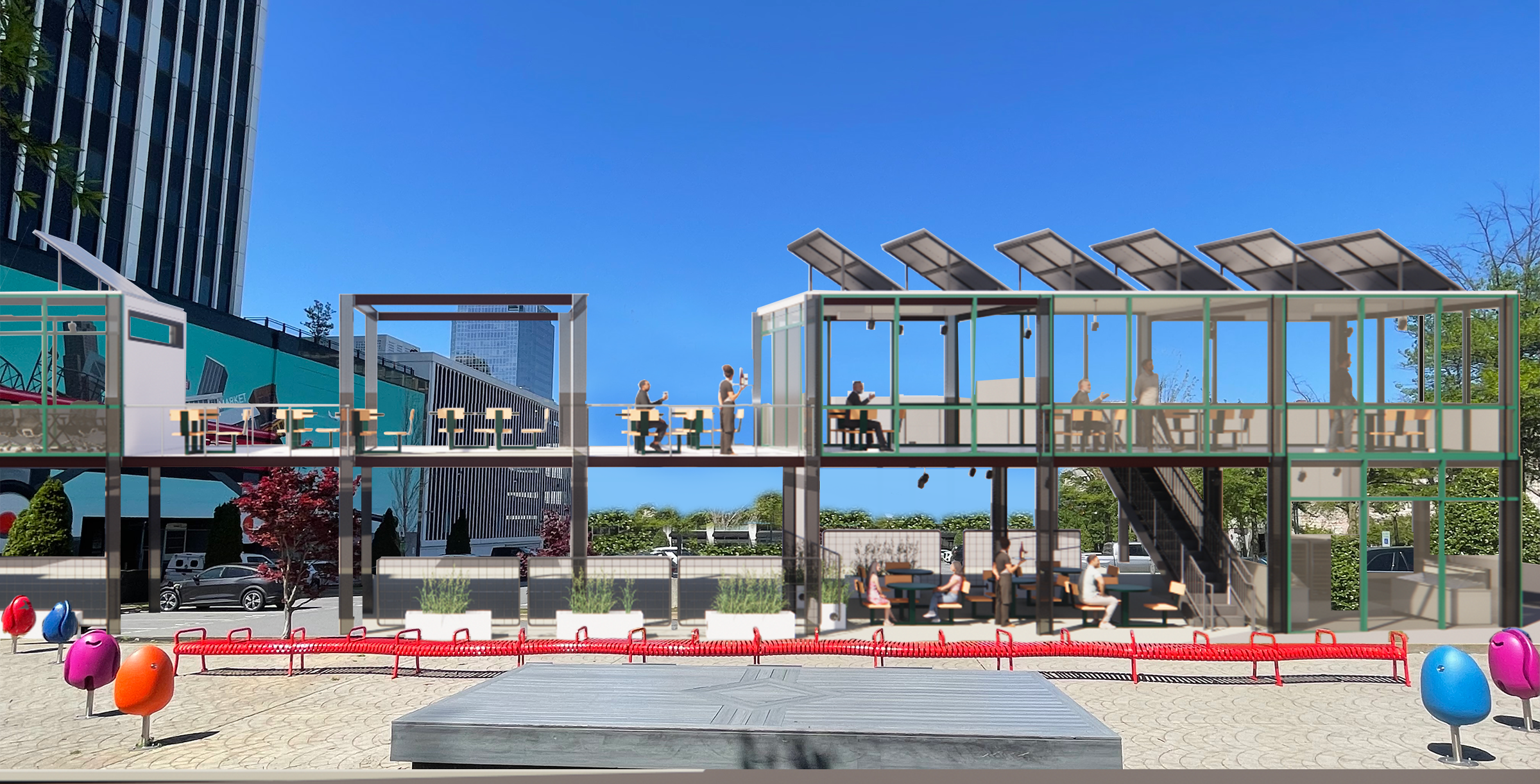
Welcome to the second year of Block, Street & Building’s “Reimagine the Town You Love” contest. Once again, we tasked city planners with envisioning their cities and towns through the lens of new urbanism via the Arkansas Times Blog and the Arkansas Municipal League. This year’s proposals rose to the challenge of conceptualizing communal spaces that prioritize walkability, livability and the seamless integration of commercial and residential spaces. The top entries upheld new urbanism by imagining vibrant communities, reducing dependency on cars and creating inclusive environments.
The entries were evaluated considering feasibility and their potential impact on their surroundings. We are proud to present two winning projects, which represent the dedication and creativity of their creators. These winning entries will be featured in a special session of the Arkansas Municipal League’s 90th Annual Convention, scheduled for June 12-14.
Foodscapes
Urban Agricultural Plan for the
Fayetteville Public Library.
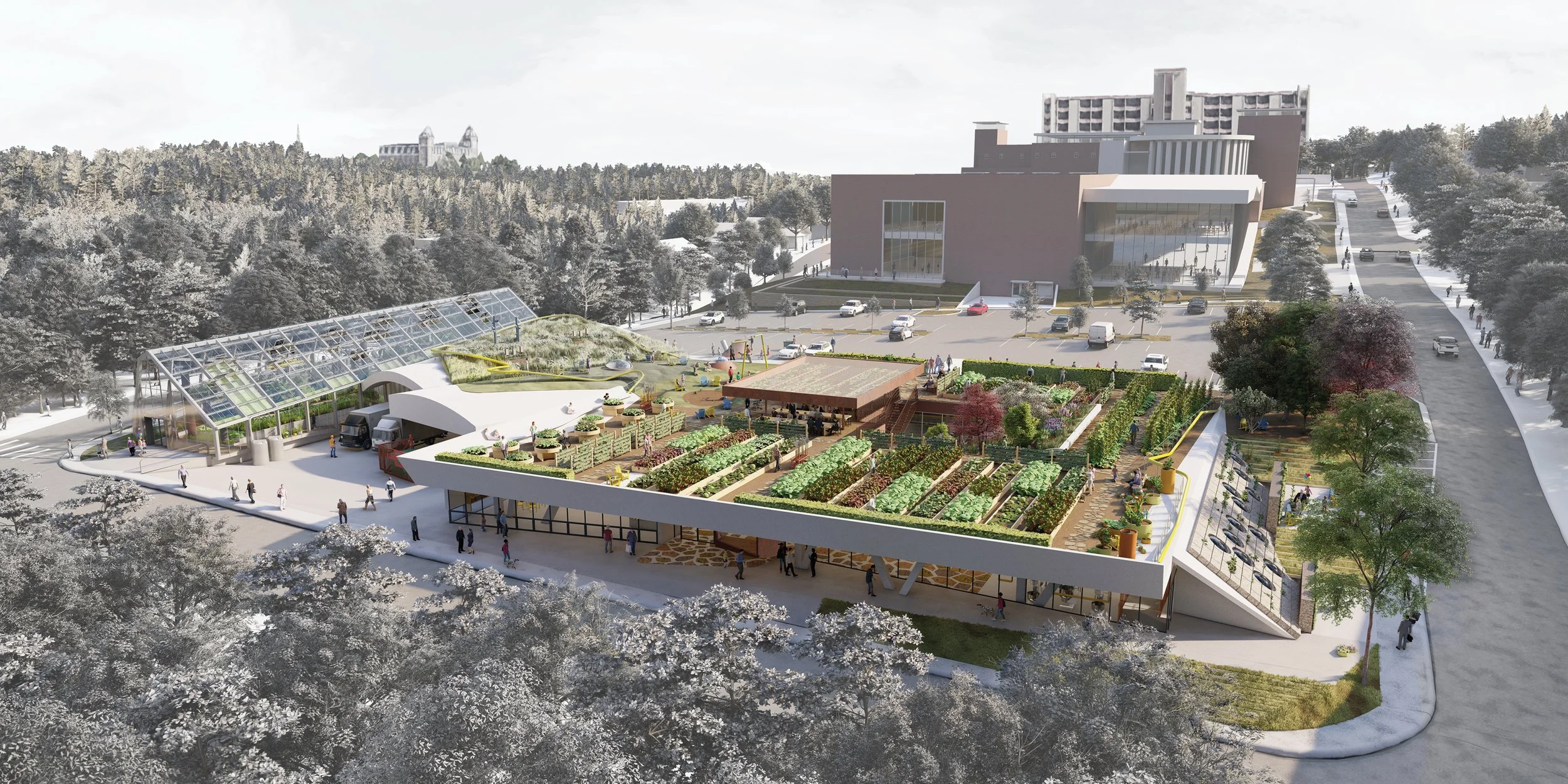
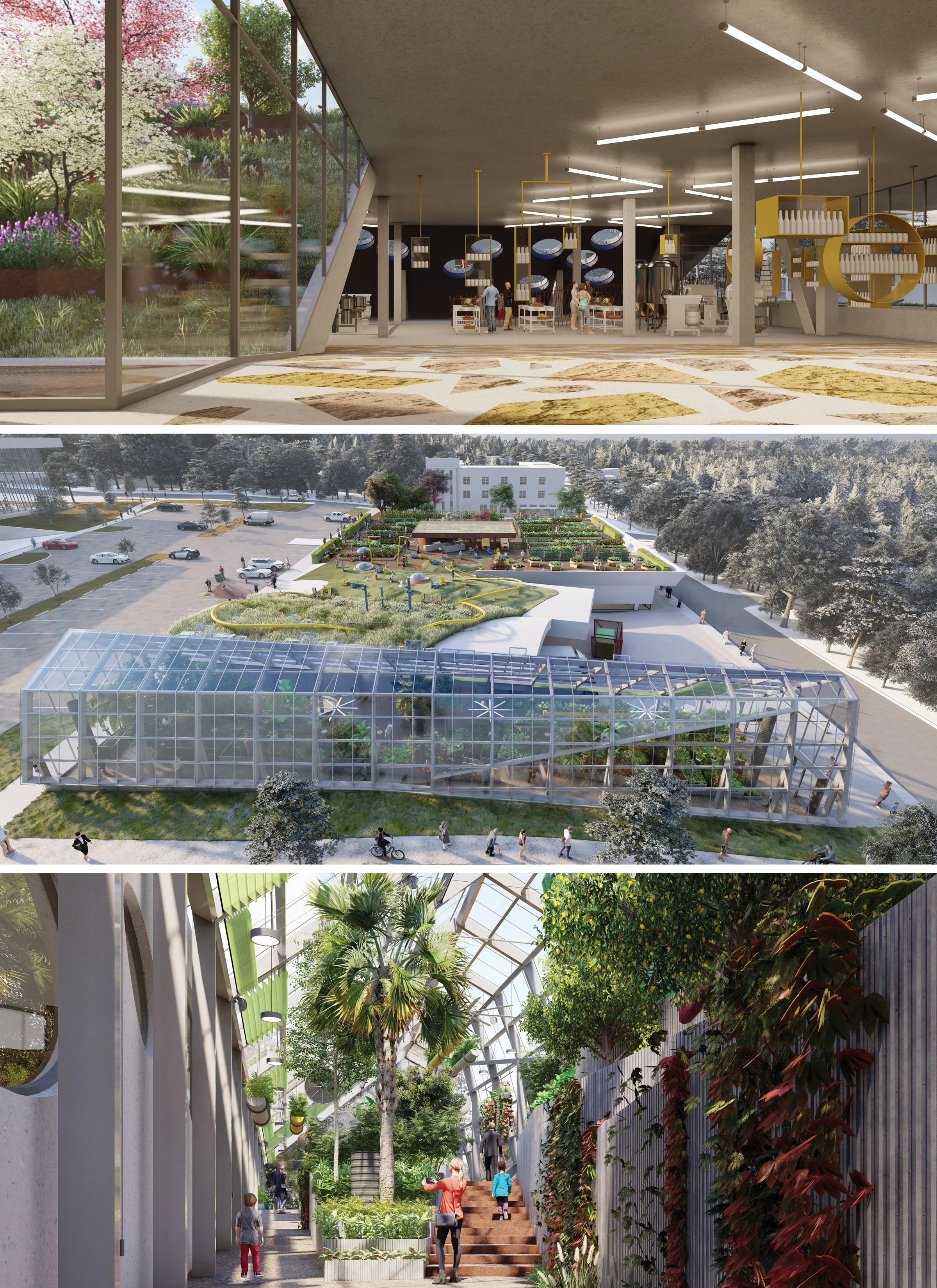
Foodscapes introduces urban food gardens and food processing/aggregator facilities at the Fayetteville Public Library’s downtown hillside campus. Foodscapes maximizes the site’s available footprint by embedding a full-service food hub below grade while supporting rooftop permaculture growing above. The rooftop gardens are sloped to connect with indoor value-added production processes and food waste recovery below. This megastructural approach integrates food growing, processing, a greenhouse and sustainable building systems, including composting and heat exchange between soil and air, in a mobius strip development of the site. Four planning principles drive the proposal:
University of Arkansas Community Design Center, an outreach center of the Fay Jones School of Architecture and Design. This project was made possible by the funding from U.S. Department of Agriculture Natural Resources Conservation Service.
• Create memorable and didactic urban landscapes that foster discovery, learning and literacy about food, regardless of the season.
• Employ a permaculture approach to agricultural landscapes, replicating ecological functioning found in nature.
• Stack functions so that urban landscapes and buildings are performing multiple functions while closing energy loops that create a regenerative economy.
• Employ a planning pattern language where components offer flexibility.
Foodscapes features a permaculture pattern language replicating ecosystem structure found in nature. Growing will be curated across novel microenvironments that promote discovery. They include small-plot organic teaching gardens, a temperate food forest, terraced orchards for foraging, a four-season greenhouse with a climate battery, and vernacular growing technologies in espaliers and thermal wall gardens using “fruit walls.” The food hub doubles as an event space, a seed bank and a “third place” for informal public gatherings. The greenhouse is a four-season operation and powered by renewable energy in the form of a “climate battery.” Foodscapes promotes food literacy and security, enriching the Fayetteville Public Library’s service as a cherished social infrastructure.
The list of participants on this project.
uacdc.uark.edu/foodscapes-team
FILLING THE DONUT
A concept for surface parking that
won’t budge.
Despite the progress Downtown Little Rock has made since the late 1990s and early 2000s, the city is still plagued with too many surface parking lots. This problem is not unique to Little Rock, as many other cities also suffer from the same issue. In Little Rock’s central business district and surrounding areas, there are many surface parking lots that detract from the urban landscape and reduce property values.
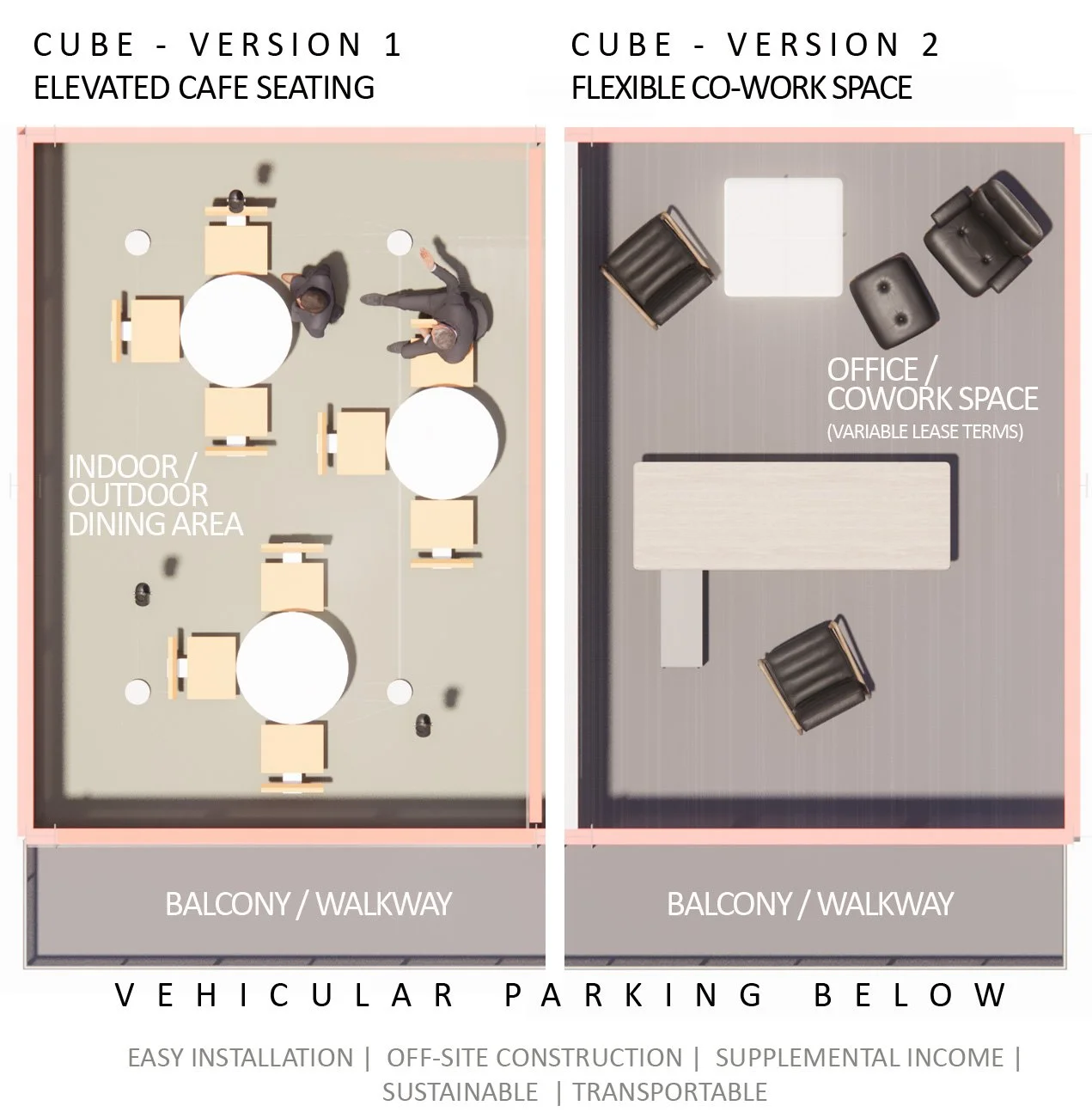
However, instead of dwelling on the problem, we can strategically transform these underutilized spaces to add color, life and activity to the city. Unfortunately, the owners of these lots often face a difficult decision between the safety of an income stream from automobile leases or the risk of investing in a new structure with uncertain financial forecasts.
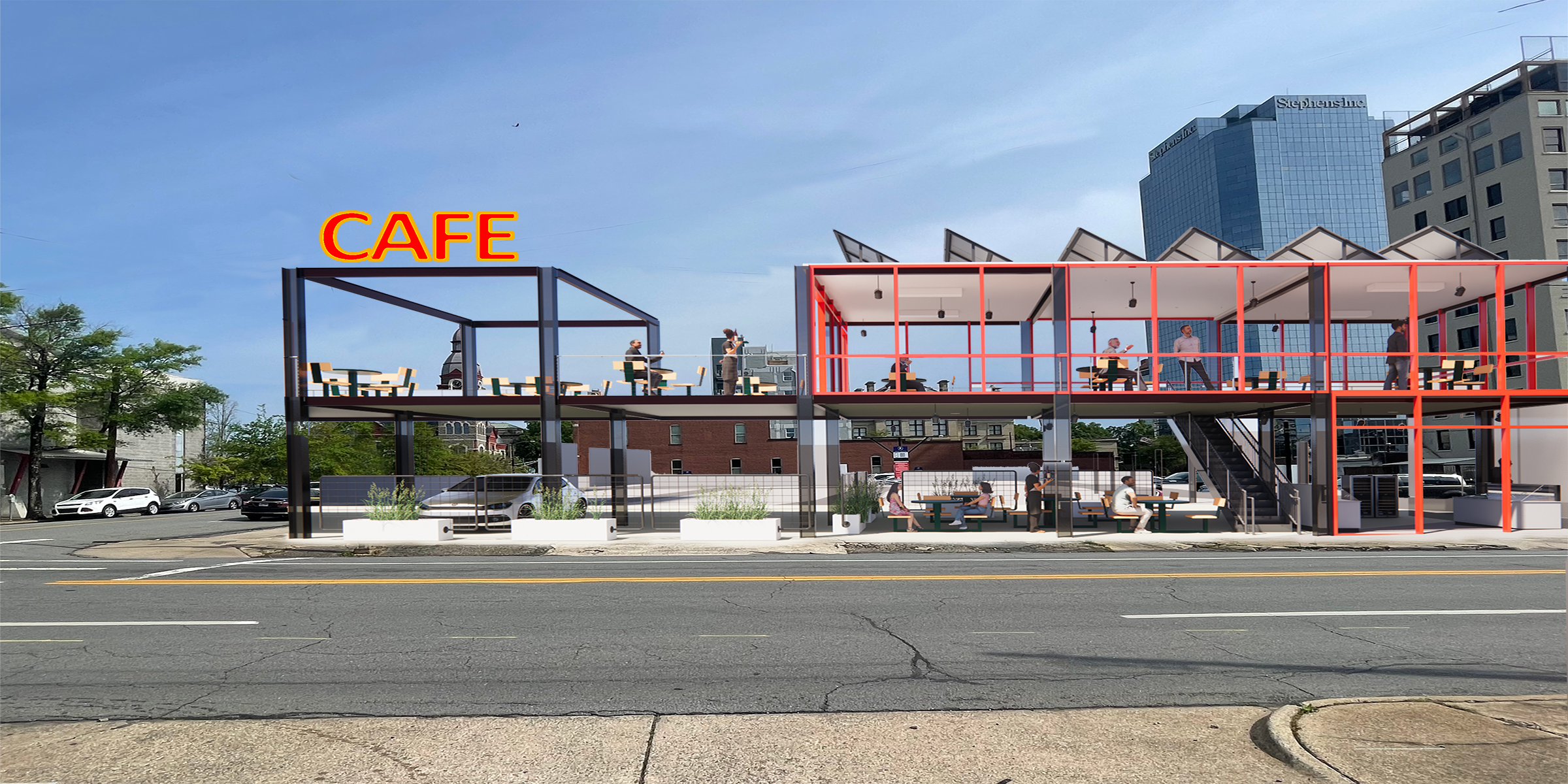
To bridge this gap, we propose a cost-effective, sustainable, flexible and modular structure that can be incrementally installed on these parking lots. By leasing air-rights, owners can install a new structure with a reasonable investment while maintaining their parking supply. This approach allows them to redefine the outmoded surface parking lot, repairing the urban fabric and capturing additional income.
The new structure will be suspended above the vehicles on the surface level, allowing owners to maintain 90-95% of the total parking count while adding interest and income to their asset. This solution offers a win-win situation for both the property owners and the city.
Jamie Moses, Michael McCallum, AIA, District Design PLLC